

- University
- Academic
- Schools/Vocational Schools
- Vocational School of Justice
- Vocational School
- Vocational School
- Department of Banking and Insurance (Turkish)
- Department of Computer Programming (Turkish)
- Department of Foreign Trade (Turkish)
- Department of Graphic Design (Turkish)
- Department of Interior Design (Turkish)
- Department of Construction Technology (Turkish)
- Department of Occupational Health and Safety (Turkish)
- Department of Media and Communication (Turkish)
- Department of Architectural Restoration (Turkish)
- Department of Radio and Tv Programming (Turkish)
- Department of Civil Aviation Cabin Services (Turkish)
- Department of Civil Aviation Transportation Management (Turkish)
- Department of Tourism and Hotel Management (Turkish)
- Department of Applied English Translation
- Vocational School Of Health Services
- Vocational School Of Health Services
- Department of Child Development (Turkish)
- Department of Physiotherapy (Turkish)
- Department of Paramedic (Turkish)
- Department of Opticianry (Turkish)
- Department of Medical Documentation and Secreteriat (Turkish)
- Department of Medical Imaging Techniques (Turkish)
- Department of Medical Laboratory Techniques (Turkish)
- Department of Elderly Care (Turkish)
- School of Applied Management Sciences
- School of Foreign Languages
- Faculties
- Faculty of Arts and Sciences
- Faculty of Fine Arts and Design
- Faculty of Law
- Faculty of Communication
- Faculty of Business
- Faculty of Engineering
- Faculty of Engineering
- Department of Computer Engineering
- Department of Biomedical Engineering
- Department of Electrical and Electronics Engineering
- Department of Industrial Engineering
- Department of Food Engineering
- Department of Genetics and Bioengineering
- Department of Aerospace Engineering
- Department of Civil Engineering
- Department of Mechanical Engineering
- Department of Mechatronics Engineering
- Department of Software Engineering
- Faculty of Health Sciences
- Medicine
- Graduate School
- Common Courses
- Schools/Vocational Schools
- Research
- Research Centers
- Library
- Smart Campus
- Technology Transfer Office
- İzmir Sciencepark
- Continuous Education Center (EKOSEM)
- Children's University
- Ethics Committee
- Teaching and Learning Center (EKOEĞİTİM)
- Psychology Application and Research Center
- Researcher Training Coordinatorship
- Research Collaborations And Innovation Coordinatorship
- Campus
- INTERNATIONAL
- Contact
- 25TH YEAR
Department of New Media and Communication
NMC 453 | Course Introduction and Application Information
| Course Name |
Turkish Media History
|
|
Code
|
Semester
|
Theory
(hour/week) |
Application/Lab
(hour/week) |
Local Credits
|
ECTS
|
|
NMC 453
|
Fall/Spring
|
3
|
0
|
3
|
4
|
| Prerequisites |
None
|
|||||
| Course Language |
English
|
|||||
| Course Type |
Elective
|
|||||
| Course Level |
First Cycle
|
|||||
| Mode of Delivery | - | |||||
| Teaching Methods and Techniques of the Course | - | |||||
| National Occupation Classification | - | |||||
| Course Coordinator | - | |||||
| Course Lecturer(s) | ||||||
| Assistant(s) | - | |||||
| Course Objectives | The aim of the course is to introduce the students to the main periods, events and discussion points of the history of Turkish media since the 19 th century. |
| Learning Outcomes |
The students who succeeded in this course;
|
| Course Description | The course outlines the main developments in the history of the Turkish media. It shows the significance of the technological development in the media and their impact on culture and society. |
| Related Sustainable Development Goals |
|
|
|
Core Courses | |
| Major Area Courses | ||
| Supportive Courses |
X
|
|
| Media and Management Skills Courses | ||
| Transferable Skill Courses |
WEEKLY SUBJECTS AND RELATED PREPARATION STUDIES
| Week | Subjects | Related Preparation |
| 1 | Presentation and overview of the course | |
| 2 | Emergence of the Press in the Ottoman Empire | William J. Watson, ‘İbrāhīm Müteferriḳa and Turkish Incunabula’, Journal of the American Oriental Society, Vol. 88, No. 3 (Jul. - Sep., 1968), pp. 435-441. http://www.jstor.org/stable/596868 Alrmizan, Mohammed. 2019. The Historical Development of the Turkish Press. https://kfcris.com/pdf/b1e3f9dd19fddc0704b4025e2d61eaef5d062f809b9b5.pdf |
| 3 | Press during the National Independence War | Milli Mücadele Basını, İstanbul, Gazeteciler Cemiyeti Yayını, 1964. |
| 4 | Press in the Republic of Turkey | Kocabaşoğlu, Uygur. (2007), "Tek Parti Dönemi Matbuatı Üzerine Gözlemler". Mete Tunçay’a Armağan, Mehmet Ö. Alkan,Tanıl Bora, Murat Koraltürk (der.), İletişim Yayınları, İstanbul, 2007.Üyepazarcı, Erol. The Istanbul Press in the republican Era. https://istanbultarihi.ist/617-the-istanbul-press-in-the-republican-era |
| 5 | Book Publishing | Boyraz, Cemil. “Book Publishing in Turkey: Problems and Prospects in the Context ff Industrialization”, The Graduate School ff Social Scinces of the Middle East Technical University, 2006. |
| 6 | Development of the Periodical Press | Çevikalp, Mesut. (2011). News Magazines of Turkish Press History in the 20th Century , Master of Arts, Institute of Social Sciences, Fatih University, February 2011. Kılıç, Sibel. (2011). “Contribution Of Karagoz Humour Magazine (1908 – 1955) to Sociocultural Transformations of the Turkish Society Which Derives Its Sources From The Karagoz Humour Practices And Its Importance Through The Perspective Of The Turkish Cultural History” , Uluslararası Sosyal Aratırmalar Dergisi The Journal of International Social Research, Volume: 4 Issue: 16 , Winter, 2011. |
| 7 | Radio Broadcasting | Capik, Sidar. (2018). The History Of Radio In Turkey And The Effects Of Radio Music Broadcasting On Turkish Music, Masters Degree Music Art Major, Okan University Institute Of Social Studies, Istanbul 2018. |
| 8 | TV Broadcasting | Kejanlıoğlu, Beybin. (2001). Turkish Broadcasting Policy in a Historical Context: Continuties and Discontinuties, Kültür ve İletişim, 4 (2), Summer, p.85-104. Kuyucu, Mihalis. (2015). “History of Satellite TV Broadcasting and Satellite Broadcasting Market in Turkey” , International Journal of Science Culture and Sport (IntJSCS) September 2015: 3(3) ISSN: 2148-1148 Doi: 10.14486/IntJSCS442 |
| 9 | Midterm Week | |
| 10 | Photography | “The Art of Photography and Sound in OttomansMehmet Burak ‘The Advent of the Electric Telegraph in the Ottoman Empire” in Roderic H. Davidson, Essays in Ottoman and Turkish History 1774-1923, University of Texas Press, 2011, pp.133-165. Shaw, Wendy M. K. (2009) Ottoman Photography of the Late Nineteenth Century: An ‘Innocent’ Modernism?, History of Photography, 33:1, 80-93, DOI: 10.1080/03087290802582996. https://doi.org/10.1080/03087290802582996 |
| 11 | An Outline of History of Cinema in Turkey | 11 An Outline of History of Cinema in Turkey Erdogan, Nezih/ Göktürk Deniz. 2001. “Turkish Cinema”, in Companion Encyclopedia of Middle East and North African Film, Routldge, p.533-573. Hayir, Celal. Ty.The Turkish Cinema Between Its Inception And Downfall: A Historical Overview, Uluslararası Sosyal Araştırmalar Dergisi/ The Journal of International Social Research, Volume: 7 Issue: 35. Issn: 1307-9581 |
| 12 | Local Media in Turkey | Uçak,.Olcay./ Erka, Abdi. (2019). “Osmanlı’dan Günümüze Türkiye’de Yerel Basinin Gelişim Süreci”, Selçuk İletişim, 2019, 12 (1): 92-122. |
| 13 | Alternative Media in Turkey | Alankuş, S. (2003) BİA ve BİA Eğitim Çalışmaları Üzerine, S Alankuş (der) Yeni İletişim Teknolojileri ve Medya, IPS İletişim Vakfı Yayınları, İstanbul, pp. 5-24. |
| 14 | Student Presentations | S. Alankuş (2003), "BİA ve BİA Eğitim Çalışmaları Üzerine"; R. Duran "Türkiye'de Yerel, Bağımsız Medya ve Yurttaş Gazeteciliği". |
| 15 | Review of the semester | |
| 16 | Final Exam Week |
| Course Notes/Textbooks | |
| Suggested Readings/Materials | İnuğur, M. Nuri. (1988).“Kurtuluş Savaşı’nda ‘Yeni Gün’ ve Yunus Nadi Abalıoğlu, Türk Basınında “İz” Bırakanlar, İstanbul, Der Yayınları.
Kocabaşoğlu, Uygur. (1981). “Milli Mücadele’nin Sözcülerinden Anadolu’da Yeni Gün”, A. Ü. Siyasal Bilgiler Fakültesi Dergisi, Atatürk Özel Sayısı, C. XXXVI, Sayı 1-4.
Topuz, Hıfzı (1973), 100 Soruda Türk Basın Tarihi, istanbul, Gerçek Yayınevi.
Varlık, Bülent. “Tanzimat ve Meşrutiyet Dergileri”. (1984). Türkiye’de Dergiler Ansiklopedisi (1849-1984), Gelişim Yayınları, İstanbul, 1984.
Kocabaşoğlu, U. (1984), “Cumhuriyet Dergiciliğine Genel Bir Bakış”, Türkiye’de Dergiler Ansiklopedisi (1849-1984), Gelişim Yayınları, İstanbul, 1984.
Demir, Kenan. “Osmanlı'da Dergiciliğin Doğuşu ve Gelişimi (1849-1923)”. (1984). Türkiye’de Dergiler Ansiklopedisi (1849-1984), Gelişim Yayınları, İstanbul, 1984.
Arslan, Savaş./ Tetik, Tuna. (2021). “Quality TV, Turkish Television History and the Transformation of Sıfır Bir”, JPF&T-Journal of Popular Film and Television, DOI: 10.1080/01956051.2021.1769018.
Çankaya, Özden. TRT; Bir Kitle İletişim Kurumunun Tarihi: 1927-2000, İstanbul: YKY, 2003.
Kejanlıoğlu, Beybin./Çelenk, Sevilay./Adaklı, Gülseren. (2001). Medya Politikaları: Türkiye'de Televizyon Yayıncılığının Dinamikleri, Ankara, İmge Kitabevi.
Kaya, Raşit. & Çakmur, Barış. (2010). “Politics and the Mass Media in Turkey”, Turkish Studies, 11:4, 521-537, DOI: 10.1080/14683849.2010.54011 Özendes, E. (2013). The Art of Photography in Ottomans, İstanbul, Yem Yayınları.
Dorsay, Atilla. (2004). Sinemamızda Çöküş ve Rönesans Yılları, Türk Sineması 1990-2004, pp.11-29.
Scognamillo, Giovanni. (2003). Türk Sinema Tarihi, İstanbul, Kabalcı Yayınları.
Abisel, Nilgün. Türk Sineması Üzerine Yazılar, Phoenix, 2005, pp.48-71.
Onaran, Alim Şerif. Türk Sineması, Cilt I, Kitle Yayınları, 1999, pp.11-38. |
EVALUATION SYSTEM
| Semester Activities | Number | Weigthing |
| Participation |
1
|
10
|
| Laboratory / Application | ||
| Field Work | ||
| Quizzes / Studio Critiques | ||
| Portfolio | ||
| Homework / Assignments | ||
| Presentation / Jury |
1
|
30
|
| Project | ||
| Seminar / Workshop | ||
| Oral Exams | ||
| Midterm |
1
|
30
|
| Final Exam |
1
|
30
|
| Total |
| Weighting of Semester Activities on the Final Grade |
3
|
60
|
| Weighting of End-of-Semester Activities on the Final Grade |
1
|
40
|
| Total |
ECTS / WORKLOAD TABLE
| Semester Activities | Number | Duration (Hours) | Workload |
|---|---|---|---|
| Theoretical Course Hours (Including exam week: 16 x total hours) |
16
|
3
|
48
|
| Laboratory / Application Hours (Including exam week: '.16.' x total hours) |
16
|
0
|
|
| Study Hours Out of Class |
14
|
1
|
14
|
| Field Work |
0
|
||
| Quizzes / Studio Critiques |
0
|
||
| Portfolio |
0
|
||
| Homework / Assignments |
0
|
||
| Presentation / Jury |
1
|
14
|
14
|
| Project |
0
|
||
| Seminar / Workshop |
0
|
||
| Oral Exam |
0
|
||
| Midterms |
1
|
14
|
14
|
| Final Exam |
1
|
26
|
26
|
| Total |
116
|
COURSE LEARNING OUTCOMES AND PROGRAM QUALIFICATIONS RELATIONSHIP
|
#
|
Program Competencies/Outcomes |
* Contribution Level
|
|||||
|
1
|
2
|
3
|
4
|
5
|
|||
| 1 |
To be able to critically discuss and interpret the theories, concepts and ideas that form the basis of the discipline of new media and communication. |
-
|
-
|
-
|
-
|
-
|
|
| 2 |
To be able to critically interpret theoretical debates concerning the relations between the forms, agents, and factors that play a role in the field of new media and communication. |
-
|
-
|
-
|
-
|
X
|
|
| 3 |
To have the fundamental knowledge and ability to use the technical equipment and software programs required by the new media production processes. |
-
|
-
|
-
|
-
|
-
|
|
| 4 |
To be able to gather, scrutinize and scientifically investigate data in the processes of production and distribution. |
-
|
-
|
-
|
-
|
-
|
|
| 5 |
To be able to use the acquired theoretical knowledge in practice. |
-
|
-
|
-
|
-
|
-
|
|
| 6 |
To be able to take responsibility both individually and as a member of a group to develop solutions to problems encountered in the field of new media and communication. |
-
|
-
|
-
|
-
|
-
|
|
| 7 |
To be informed about national, regional, and global issues and problems; to be able to generate problem-solving methods depending on the quality of evidence and research, and to acquire the ability to report the conclusions of those methods to the public. |
-
|
-
|
-
|
-
|
-
|
|
| 8 |
To be able to critically discuss and draw on theories, concepts and ideas that form the basis of other disciplines complementing the field of new media and communication studies. |
-
|
-
|
X
|
-
|
-
|
|
| 9 |
To be able to develop and use knowledge and skills towards personal and social goals in a lifelong process. |
-
|
-
|
-
|
-
|
-
|
|
| 10 |
To be able to apply social, scientific and professional ethical values in the field of new media and communication. |
-
|
-
|
-
|
-
|
-
|
|
| 11 |
To be able to collect datain the areas of new media and communication and communicate with colleagues in a foreign language ("European Language Portfolio Global Scale", Level B1). |
-
|
-
|
-
|
-
|
-
|
|
| 12 |
To be able to speak a second foreign language at a medium level of fluency efficiently. |
-
|
-
|
-
|
-
|
-
|
|
| 13 |
To be able to relate the knowledge accumulated throughout the human history to their field of expertise. |
-
|
X
|
-
|
-
|
-
|
|
*1 Lowest, 2 Low, 3 Average, 4 High, 5 Highest




NEWSALL NEWS


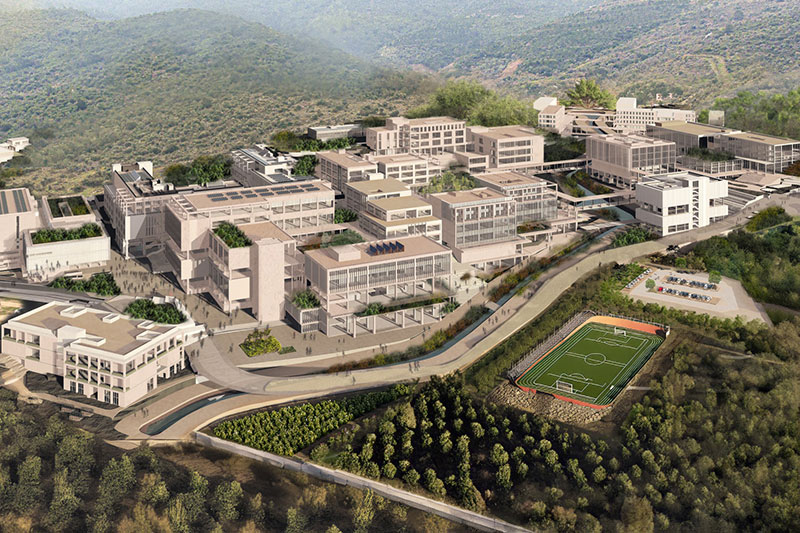
IZMIR UNIVERSITY OF ECONOMICS GÜZELBAHÇE CAMPUS
DetailsGLOBAL CAREER
As Izmir University of Economics transforms into a world-class university, it also raises successful young people with global competence.
More..CONTRIBUTION TO SCIENCE
Izmir University of Economics produces qualified knowledge and competent technologies.
More..VALUING PEOPLE
Izmir University of Economics sees producing social benefit as its reason for existence.
More..
You are one step ahead with your graduate education at Izmir University of Economics.